
Thermal conductivity up to 90 W/m·K, providing effective heat dissipation.
Maintains stable performance at temperatures up to 1200℃.
Hardness is more than twice that of traditional high-speed steel rolls.
Resistant to strong acids, strong bases, and molten metal corrosion.
Density is only 1/3 that of steel, reducing equipment inertia.
Friction coefficient as low as 0.1-0.2, reducing energy consumption.
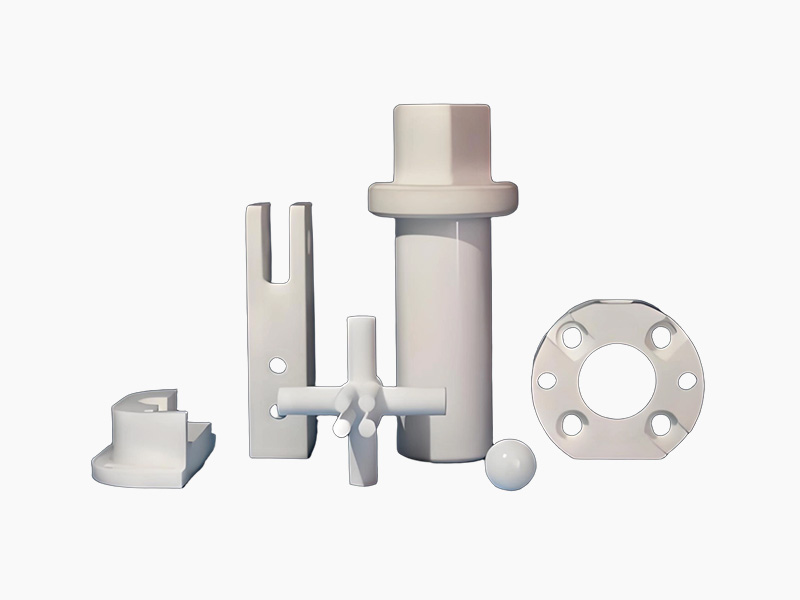
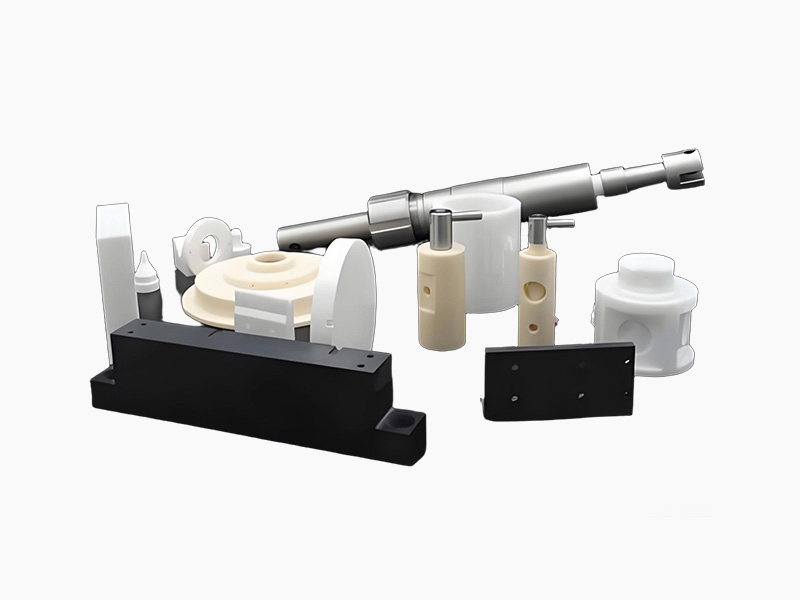
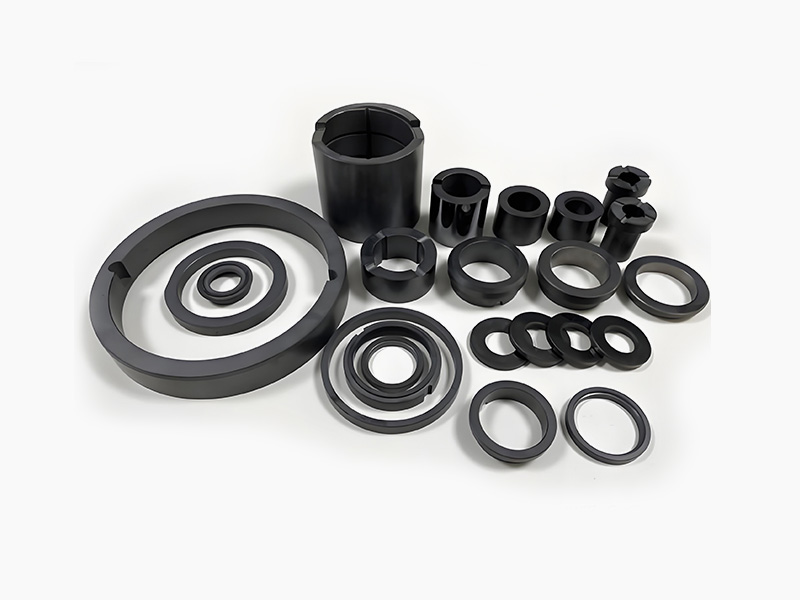
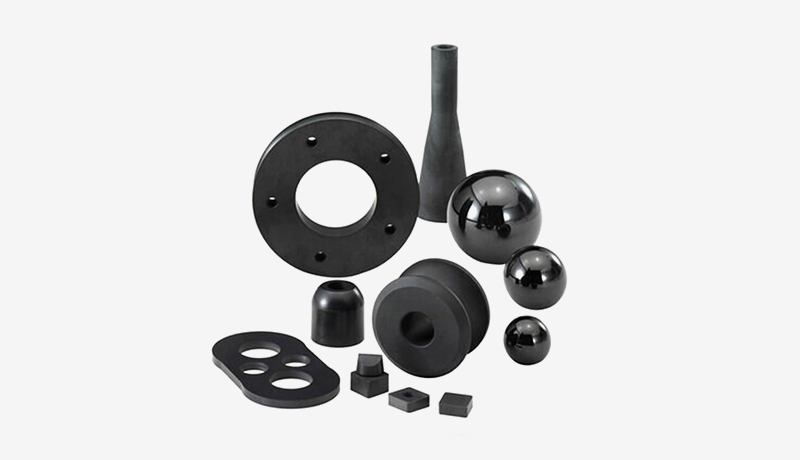
Silicon Nitride Ceramic Roller Ring is a high-performance engineering ceramic component manufactured from silicon nitride (Si₃N₄). Designed for demanding rolling, guiding, heat-transfer and wear applications, the ceramic roller ring combines high thermal conductivity, high-temperature stability, wear resistance, chemical stability, low density and low friction characteristics.
According to the supplied product information, high-thermal-conductivity silicon nitride ceramic roller rings can achieve thermal conductivity of up to 90 W/m·K, maintain stable performance at temperatures up to approximately 1200°C, and provide a low friction coefficient of approximately 0.1-0.2.
A Silicon Nitride Ceramic Roller Ring is a ring-shaped engineering ceramic component made from silicon nitride (Si₃N₄) and used as the functional rolling, guiding, supporting or wear-resistant portion of a roller assembly. Its ceramic construction is intended for applications where high temperature, heat dissipation, wear, corrosion resistance, low friction or reduced component mass are important.
Silicon nitride ceramic roller rings are advanced non-oxide ceramic components based on the strong covalent bonding of silicon and nitrogen. This material structure gives Si₃N₄ a combination of mechanical, thermal, tribological and chemical properties that are useful in demanding industrial environments.
Unlike a conventional steel roller ring, a silicon nitride ceramic roller ring is designed around the properties of an engineering ceramic. The relatively low density can reduce rotating mass and inertia, while the high hardness supports wear resistance. Its thermal conductivity can also help transfer heat away from the contact area in applications where thermal management is important.
The ring geometry can be integrated into different roller assemblies and process equipment. Depending on the equipment design, the component can function as a rolling surface, wear ring, guide ring, support ring or specialized high-temperature contact component.
The performance of a silicon nitride ceramic roller ring is primarily determined by the properties of the selected Si₃N₄ ceramic grade and its manufacturing process. The supplied product information identifies thermal conductivity, high-temperature stability, hardness, chemical stability, low density and low friction as the principal material characteristics.
| Material Property | Reference Data | Relevance to Roller Ring Applications |
|---|---|---|
| Material | Silicon Nitride (Si₃N₄) | Advanced non-oxide engineering ceramic |
| Thermal Conductivity | Up to approximately 90 W/m·K | Supports heat transfer away from thermally loaded contact areas |
| Temperature Resistance | Stable performance up to approximately 1200°C according to supplied data | Suitable for selected high-temperature rolling and processing applications |
| Hardness | Supplied information: more than twice that of traditional high-speed steel rolls | Provides strong resistance to wear and surface degradation |
| Friction Coefficient | Approximately 0.1-0.2 | Can reduce sliding friction and mechanical energy losses in suitable systems |
| Density | Supplied information: approximately one-third that of steel | Reduces rotating mass and equipment inertia |
| Chemical Stability | Resistant to strong acids, strong bases and molten-metal corrosion according to supplied information | Useful for selected corrosive and high-temperature processing environments |
| Self-Lubricating Behavior | Supplied information identifies self-lubricating characteristics | Can contribute to lower friction in suitable contact conditions |
Technical note: The numerical values shown above are reference values from the supplied product information. Actual properties depend on silicon nitride grade, microstructure, forming method, sintering conditions, geometry, surface finish and test method.
With thermal conductivity reported up to approximately 90 W/m·K, the material can help transfer heat through the ceramic ring and away from localized thermal loads.
The supplied data indicates stable performance up to approximately 1200°C, making the roller ring suitable for selected high-temperature processing environments.
The high hardness of silicon nitride provides resistance against repeated mechanical contact, rolling and abrasive wear.
The supplied friction coefficient range of approximately 0.1-0.2 indicates low-friction potential under suitable operating conditions.
The supplied information states that silicon nitride density is approximately one-third that of steel, helping reduce rotating mass and mechanical inertia.
The ceramic demonstrates strong resistance to selected aggressive chemical environments and molten-metal exposure according to the supplied information.
| Component Attribute | Description |
|---|---|
| Component Type | Ring-shaped silicon nitride ceramic roller component |
| Primary Material | Silicon Nitride (Si₃N₄) |
| Main Function | Rolling, guiding, supporting, heat transfer or wear-resistant contact function |
| Thermal Performance | High thermal conductivity with high-temperature stability |
| Wear Performance | High hardness and resistance to repeated mechanical contact |
| Friction Performance | Low-friction characteristics; application-dependent |
| Weight | Low density compared with steel, reducing rotating mass |
| Chemical Resistance | Suitable for selected acidic, alkaline and molten-metal environments |
| Surface | Precision-ground or polished according to application requirements |
| Customization | Custom outside diameter, inside diameter, width, profile and tolerances according to drawing |
Roller ring dimensions are normally determined by the roller assembly, shaft arrangement, contact load, material being processed and equipment geometry. Therefore, there is no single universal size for this component.
| Specification | Reference / Custom Configuration |
|---|---|
| Material | Silicon Nitride (Si₃N₄) |
| Thermal Conductivity | Up to approximately 90 W/m·K according to supplied information |
| Temperature Performance | Stable performance up to approximately 1200°C according to supplied information |
| Friction Coefficient | Approximately 0.1-0.2 reference range |
| Density | Supplied information: approximately one-third of steel density |
| Outside Diameter | Customized according to roller assembly |
| Inside Diameter | Customized according to shaft or mounting configuration |
| Ring Width | Customized according to contact area and equipment design |
| Cross-Section | Rectangular, radiused, stepped or drawing-specific profile |
| Surface Finish | Precision ground or polished according to application |
| Dimensional Tolerance | Drawing-specific |
| OEM / ODM | Available for customized ceramic roller-ring production |
The combination of thermal conductivity, temperature resistance, wear resistance, low friction, chemical stability and low density allows silicon nitride ceramic roller rings to be considered for multiple high-performance industries.
Used in selected high-temperature rolling and metal-processing equipment where wear resistance, thermal stability and heat transfer are important.
Can be used in specialized roller systems for copper foil and related thin-metal processing where surface condition, dimensional stability and wear performance are critical.
Suitable for selected stainless steel sheet rolling or guiding equipment where high wear resistance and thermal stability are required.
Silicon nitride ceramic components can be used in selected electronics and semiconductor equipment where thermal management, wear resistance and dimensional stability are important.
The supplied application information identifies high-power LED heat-dissipation substrates and IGBT module substrates as silicon nitride ceramic application areas. Roller-ring use in related production equipment is application-dependent.
Silicon nitride ceramics can be considered for selected gas-turbine and high-temperature structural systems where low density and thermal stability are valuable.
The chemical stability of silicon nitride supports applications involving selected corrosive media, including wear-resistant and sealing components.
The roller ring can be considered for specialized high-temperature rolling, guiding, support and contact mechanisms where conventional metallic components face thermal or wear limitations.
The roller ring is normally integrated into a larger roller or rotating assembly. Depending on the equipment design, it can serve several different mechanical functions.
1. Rolling contact assemblies: Provides a ceramic rolling surface for selected industrial processes.
2. Guide roller systems: Helps guide sheets, foils, strips or other continuously moving materials.
3. High-temperature roller assemblies: Provides a ceramic contact surface in elevated-temperature processing equipment.
4. Metal sheet processing equipment: Can be integrated into selected copper foil and stainless steel sheet processing systems.
5. Wear-ring assemblies: Functions as a replaceable wear-resistant ring where repeated mechanical contact occurs.
6. Precision rotating equipment: Low density can help reduce rotating inertia in suitable designs.
7. Thermal-management mechanisms: High thermal conductivity can help manage heat generated around contact areas.
8. Chemically demanding machinery: Can be considered where chemical stability is required in addition to mechanical wear resistance.
Silicon nitride ceramic roller rings require controlled ceramic processing and precision finishing. According to the supplied product information, hot pressing or gas pressure sintering can be used to manufacture the ceramic component. The specific production route depends on the material grade, geometry and required performance.
Silicon nitride powder and suitable processing materials are selected according to the required thermal, mechanical and tribological properties.
The ceramic powder is conditioned with appropriate binders and additives to achieve suitable forming behavior and final material performance.
The prepared powder is shaped into a roller-ring blank using an appropriate ceramic forming method.
Controlled densification develops the required ceramic microstructure and mechanical properties.
The ceramic blank is prepared for final dimensional processing according to the required ring geometry.
Precision grinding establishes the outside diameter, inside diameter, width and other critical dimensions.
The roller-contact surface can be ground or polished according to friction, contact and surface-quality requirements.
Final inspection verifies critical dimensions, surface condition and specified technical requirements before cleaning and protective packaging.
XIAMEN HUACIJULI focuses on silicon nitride ceramic components for demanding industrial applications. For roller-ring projects, material selection, ring geometry, surface finish and operating conditions can be considered together to develop a component suitable for the customer's equipment.
Specialized focus on silicon nitride ceramic components for high-temperature, wear, thermal-management and precision applications.
Outside diameter, inside diameter, ring width, cross-section and other geometric features can be customized according to technical drawings.
Precision grinding and finishing can be applied to critical rolling surfaces and dimensional features.
Material and component design can be evaluated for high-temperature processing, thermal cycling and heat-transfer requirements.
Custom silicon nitride ceramic roller rings can be manufactured according to customer drawings, samples and application specifications.
Component requirements can be evaluated according to load, speed, temperature, contact material, surface finish and chemical environment.
| Engineering Requirement | Silicon Nitride Ceramic Roller Ring Response |
|---|---|
| Heat Dissipation | Thermal conductivity up to approximately 90 W/m·K according to supplied data. |
| High Temperature | Stable performance up to approximately 1200°C according to supplied information. |
| Wear Resistance | High ceramic hardness supports resistance to repeated rolling and contact wear. |
| Friction | Reference friction coefficient of approximately 0.1-0.2 under suitable conditions. |
| Rotating Mass | Low density compared with steel can reduce rotating inertia. |
| Chemical Exposure | Strong chemical stability against selected aggressive media according to supplied information. |
It is a ring-shaped engineering ceramic component made from silicon nitride and designed for rolling, guiding, supporting, heat-transfer or wear-resistant functions in industrial equipment.
According to the supplied product information, thermal conductivity can reach approximately 90 W/m·K. Actual thermal conductivity depends on the specific silicon nitride grade and test conditions.
Yes. The supplied information states that the material can maintain stable performance at temperatures up to approximately 1200°C. Actual operating limits depend on material grade, atmosphere, load, speed and component geometry.
Yes. Silicon nitride has high hardness and strong wear resistance. The supplied information describes its hardness as more than twice that of traditional high-speed steel rolls.
The supplied product information gives a reference friction coefficient of approximately 0.1-0.2. Actual friction depends on load, speed, surface finish, mating material, lubrication and operating environment.
Silicon nitride can provide a combination of lower density, high hardness, high-temperature stability, thermal conductivity, chemical resistance and low-friction characteristics. The appropriate material depends on the specific roller application and operating conditions.
Representative fields include metallurgy, copper foil rolling, stainless steel sheet processing, electronics and semiconductor equipment, aerospace, chemical equipment and specialized high-temperature mechanical systems.
Yes. Outside diameter, inside diameter, width, cross-section, surface finish and dimensional tolerances can be specified according to the customer's drawing and equipment requirements.
The supplied product information identifies hot pressing and gas pressure sintering as manufacturing routes. Precision grinding and surface finishing can then be used to achieve the required geometry and surface condition.
A drawing or sample is preferred. Important information includes outside diameter, inside diameter, width, dimensional tolerances, surface finish, operating temperature, load, speed, mating material, lubrication conditions and chemical environment.
The performance of a silicon nitride ceramic roller ring depends on ceramic grade, microstructure, density, manufacturing process, ring geometry, surface finish, contact pressure, rolling speed, temperature, lubrication and mating materials. The numerical values on this page are reference data supplied for this product and should be confirmed against the specific material grade and application before production use.
Silicon Nitride Ceramic Roller Ring combines high thermal conductivity, high-temperature stability, wear resistance, chemical stability, low density and low-friction characteristics for demanding industrial applications. XIAMEN HUACIJULI provides customized Si₃N₄ ceramic roller components according to drawings, samples and application requirements.
Technical Parameters
Performance indicators | Parameter value | illustrate |
Thermal conductivity | ≈90W/m·K | Excellent thermal conductivity |
Coefficient of thermal expansion | 3.2×10⁻⁶/℃ | Approaching metallic materials reduces thermal stress. |
Vickers hardness | 1400-1600 HV | Second only to diamond and cubic boron nitride. |
Flexural strength | 800 MPa | High-strength support capability |
fracture toughness | 6.0 MPa·m | Excellent impact resistance. |
Temperature resistance range | In air: 1000℃ / In protective atmosphere: 1400℃ | Good high-temperature stability. |
coefficient of friction | 0.1-0.2 | Excellent self-lubricating properties |
Supports custom specifications.